
A case report that should be on every banquet manager's wall
1,000 ppm: the carbon monoxide reading above three cans of Sterno
Burning alcohol indoors is combustion indoors. A peer-reviewed case report measured what that means at the height of a serving table.
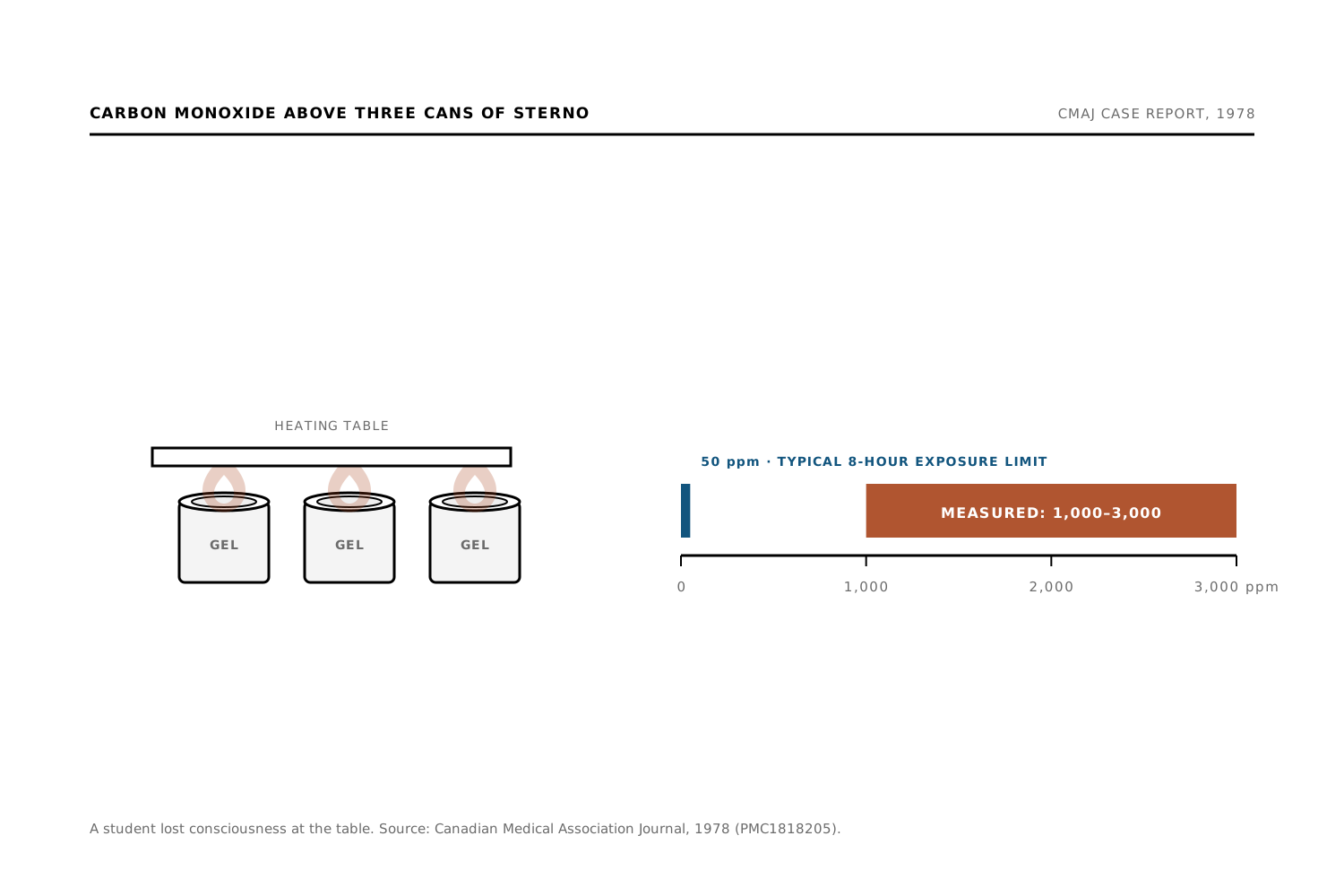
The Canadian Medical Association Journal published a short case report in 1978. A high-school student had been working over a heating table set above three cans of burning Sterno. He became ill, then lost consciousness. When investigators measured the air around and above the apparatus they found carbon monoxide at 1,000 to 3,000 parts per million.
What those numbers mean
Occupational exposure limits for carbon monoxide are typically set around 50 ppm averaged over a working day. Concentrations in the low thousands are the range associated with rapid loss of consciousness. The student recovered. The chemistry did not change.
Alcohol burns cleanly in the sense that it makes little soot. It does not burn cleanly in the sense that matters: incomplete combustion of any hydrocarbon produces carbon monoxide, and a wick or gel flame in a steel can is not a tuned burner. It is a small, inefficient fire.
Scale it up
One student, three cans, one table. A hotel breakfast line runs eight to twelve cans. A wedding reception runs more, in a marquee, for five hours, with the sides down because it is raining. Nobody is measuring. The carbon monoxide alarm, if there is one, is on the ceiling of the kitchen, not at chest height beside the eggs.
Chafing fuel manufacturers state that their products are validated for indoor use. That claim is about the product's own emissions in a ventilated test. It is not a statement about your marquee.
The alternative is not more ventilation
It is no combustion. A water-activated heat pack produces steam and nothing else. A cordless heating cell produces heat from a battery. Neither creates carbon monoxide, because neither burns anything.