
Freezing is not sterilizing
There is E. coli in the buffet ice. Here is the study.
A peer-reviewed survey of ice, ice chests and the machines that make them found faecal bacteria in one sample in fifteen. The cold buffet has a hygiene problem that has nothing to do with the food.
Ice feels clean. It is cold, it is clear, and it came out of a machine. That intuition is wrong often enough to be measured, and researchers have been measuring it for a decade.
The 2017 survey
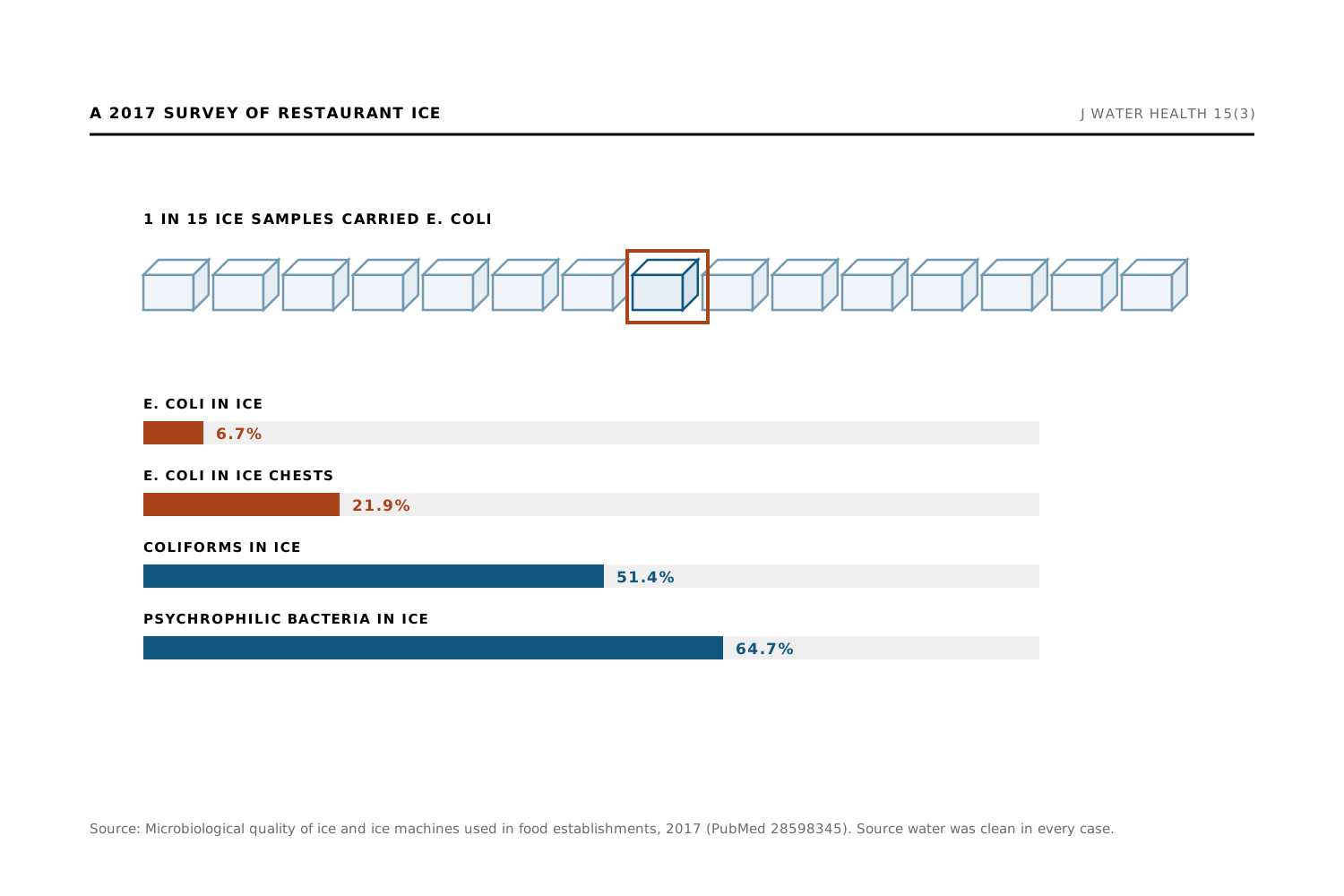
A study published in the Journal of Water and Health sampled ice, the water used to make it, and the ice chests it was stored in, across restaurants, fast-food outlets, bars and fish markets. Escherichia coli — a faecal indicator — was found in 6.7% of ice samples and 21.9% of ice chests. Coliforms were in more than half the ice. Psychrophilic bacteria, the cold-loving kind, were in almost two-thirds. The source water was clean in every case. The contamination came from the machine, the chest and the hands.
Ten years of the same result
A 2024 review in Microorganisms summarized fourteen studies from 2013 to 2023. The recurring findings were E. coli, coliforms, Pseudomonas, Staphylococcus aureus, Vibrio species, rotavirus, norovirus, molds and yeasts. Ice made on site in food businesses was consistently more contaminated than ice from industrial producers. Almost every author reached the same conclusion: the problem is the hygiene of the ice machine.
Why the buffet is worse than the bar
In a drink, ice is the product. On a buffet, ice is the bed. Oysters, sashimi, cut fruit and salad sit directly on it for hours, in a pan that is filling with melt water at room temperature. Whatever was in the ice is now in the water, and the water is in contact with the food.
What a dry cold display changes
A sealed sub-zero cell holds a tray at −10 °C for eight hours. It does not melt, so there is no water. It never touches the food, so it cannot transfer anything to it. It goes back in the freezer, wiped, rather than into a bin that has grown its own colony.