
The environmental bill for being cold
100 gallons of water for 100 pounds of ice
Commercial ice is made from potable water, electricity and more potable water. The numbers are published by the people who sell the machines, and they are not small.
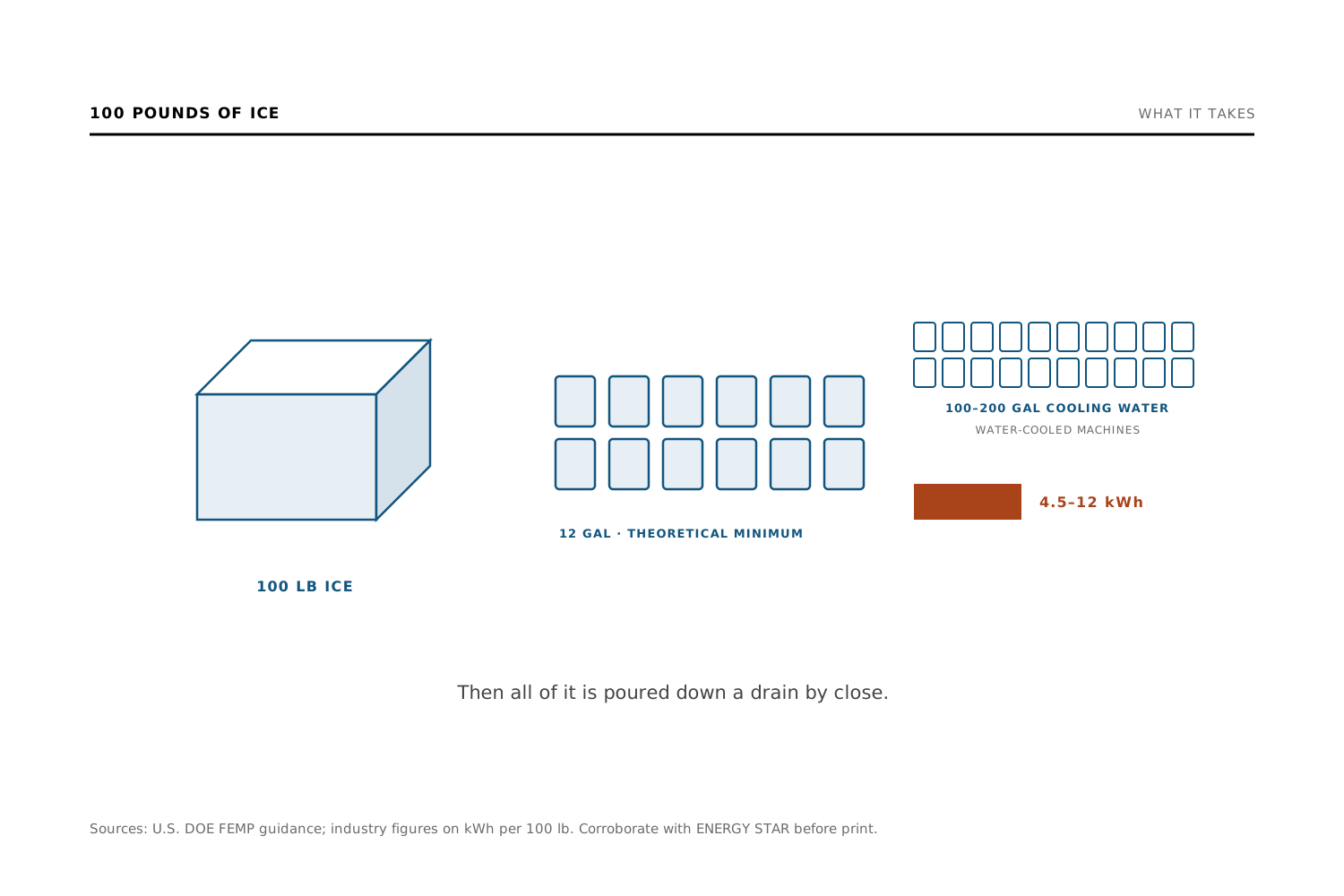
A commercial ice machine does three energy-intensive things in a loop: it chills water to freezing, it pulls out the latent heat to make it solid, and then it warms the evaporator plate to release the ice. Then it purges water to flush impurities and starts again.
Electricity
Industry figures put efficient modern machines at roughly 4.5 to 6 kWh per 100 pounds of ice, standard machines at 7 to 9.5, and older units above 12. A medium machine producing 250 pounds a day runs to around 500 kWh a month, before the cost of the walk-in it sits next to.
Water
The theoretical minimum to make 100 pounds of ice is 12 gallons. Real batch-type machines use more because they purge. Water-cooled machines then run another 100 to 200 gallons of potable water through the condenser for every 100 pounds of ice they make. Several regions now restrict water-cooled units on conservation grounds, and the U.S. Department of Energy's federal procurement guidance counts condenser water alongside potable water when it scores a machine.
And then you throw it away
Every pound of buffet ice is made, hauled, spread, melted, drained and mopped. None of it is recovered. A single evening's cold display can run through more water than the dishwasher.
The arithmetic on a cell
A sub-zero cell is frozen once in a freezer that is already running, holds −10 °C for eight hours on a table, and is frozen again. There is no water in, no water out, and no truck delivering bags. Over a year of daily service, the difference is a swimming pool.