
Raw bar without the raw bar problems
Eight hours at −10 °C: what a frozen cell changes for seafood display
Oysters on ice have a clock on them, a puddle under them and a hygiene study against them. A dry display at −10 °C for a full service rewrites all three.
The raw bar is the most photographed station on any buffet and the hardest to run. Ice has to be crushed, spread, replaced and drained. The pan fills with water that has been in contact with shellfish for hours. Health inspectors know exactly where to point a probe.
The temperature problem
An ice bed starts at 0 °C and drifts upward as it melts. A sealed cell starts at −10 °C and holds there for eight hours. The food on top of it sits at the cold end of the safe range for the whole service instead of the first hour.
The water problem
There is no melt water, because nothing melts. The tray under the seafood is dry at the end of service. Peer-reviewed surveys have found faecal indicator bacteria in a meaningful share of restaurant ice; a sealed cell never touches the food and never becomes water.
The labor problem
No ice run, no crushing, no draining mid-service, no mopping. The cells go back into the freezer at close.
The presentation
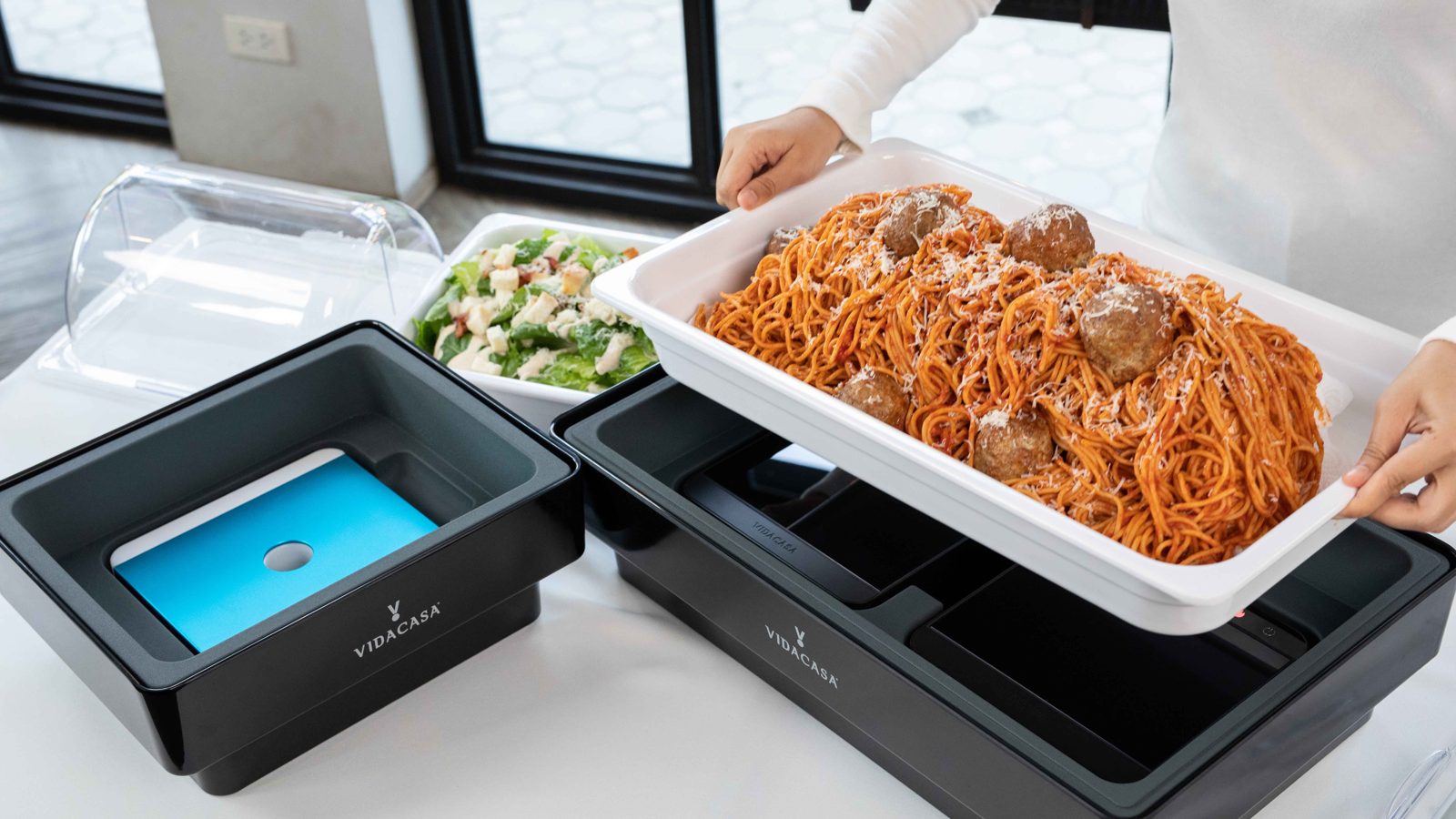
The cell sits in the well of the same frame that takes a hot cell. A black Universal set with oysters on one side and hot dishes on the other is one frame, one look, two temperatures.