
A photograph every hotel has in its incident file
横穿宴会厅地面的电线
Every induction line is also an electrical installation, laid on the day, on a floor that will be wet by the end of service.
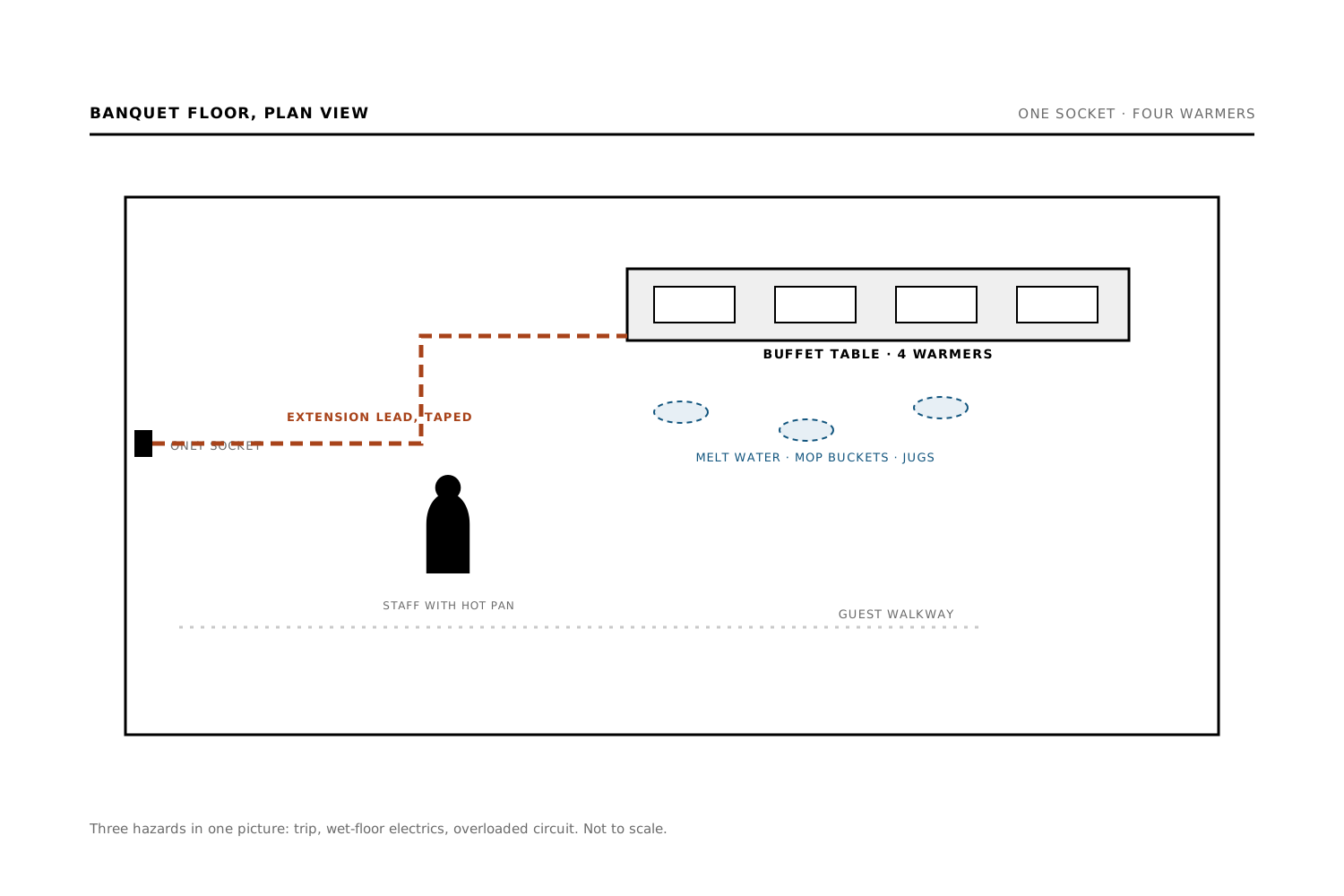
Walk the back of any banquet buffet set up on induction and you will find it: an orange extension lead taped to the carpet with gaffer tape, running from the one socket on that wall to a power strip under the table, feeding four warmers and a soup kettle.
Three hazards in one photograph
The trip. A cord taped down in the morning is a cord curling up by the afternoon, on the side of the table where staff walk with hot pans.
The water. Buffets are wet: ice pans, water baths, spilled jugs, mop buckets. Commercial-kitchen electrical guidance is unanimous that power in a wet environment needs ground-fault protection and that cords must not run across walkways. Temporary event installations rarely have either.
The load. Four induction warmers on a domestic-rated circuit is a breaker trip in the first hour and a dark buffet in the second.
The quiet cost
None of this is dramatic. It is an electrician's call-out for a two-day event, a risk assessment that has to be written, a power strip that gets kicked, and a service that stops when the breaker goes. It is the kind of cost that never appears on the equipment quote.
What no cord looks like
A cordless heating cell is charged in the kitchen and carried to the table. It holds 80 °C for three hours. A battery swap takes ten seconds. The floor has nothing on it.